Peripheral Arterial Disease FAQ – Peripheral Artery Disease Treatment in Arizona

Providing the PAD Answers You Need

Are you worried about peripheral artery disease? Perhaps your doctor has said you’re at risk, or maybe you think you’re having symptoms. Whatever the case for you, Arizona Vein and Laser Institute is here to help. Our team of experienced medical professionals can answer all of your questions about this harmful condition. Take a look at our frequently asked questions, or give our Arizona office a call for more information.

What Is Peripheral Arterial Disease?

Peripheral artery disease (PAD) is a condition that is characterized by blockages in the large peripheral arteries. In turn, this cuts off blood flow to the legs and results in significant leg pain. PAD is caused by atherosclerosis, a disease that leads to the hardening of the arteries.
A woman is illustrating common venous disorder symptoms in Mesa, Chandler, & nearby areas

What Are the Symptoms?

It’s important to recognize the symptoms of peripheral artery insufficiency and seek an evaluation from a medical professional. PAD comes with numerous symptoms, and some people experience more severe effects than others. Certain patients may not even notice any symptoms. However, staying vigilant for common signs of PAD is the first step to pain relief. Our patients often report these symptoms:
  • Leg cramps while walking or moving
  • Fatigue
  • Soreness that doesn’t go away
  • Numbness in the legs
  • Foot pain
  • Sharp calf pain
  • Discoloration in the lower legs
  • Ulcers
  • Decreased hair and nail growth on the affected leg

How Do You Diagnose PAD?

There are a few steps we’ll take to check for signs of PAD. First, we may order an ankle-brachial pressure index (ABI). This test looks at the blood pressure in your arms and compares it with the systolic pressure in the ankles. Once we receive the ABI results, we can make an educated decision on which tests to order next. We may take an arterial ultrasound or complete a computed tomography angiography scan. During your evaluation, our team will also ask you questions about your personal and familial medical history to get a better idea of your risk factors.
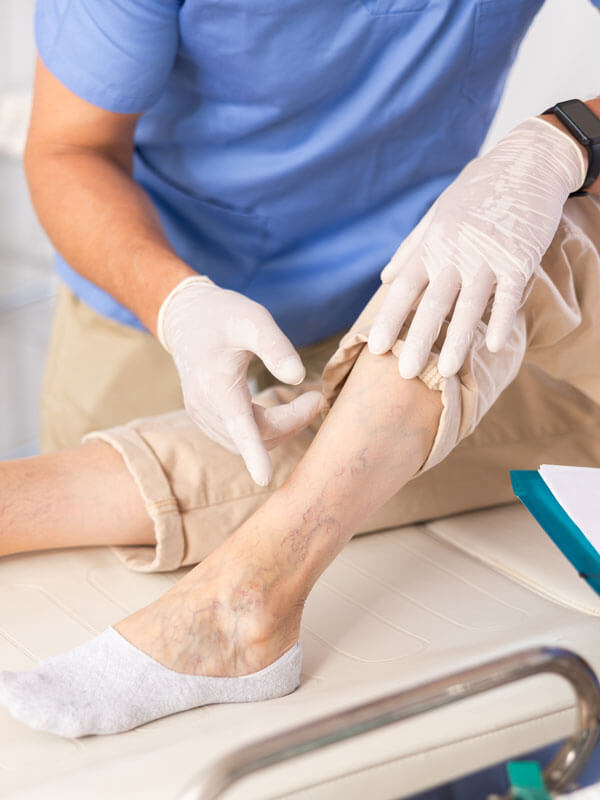
Close-up of doctor examining legs of senior woman with varicose veins, before sclerotherapy treatment

Do I Have Risk Factors for PAD?

Because not all patients show symptoms of PAD, it’s vital to keep track of your risk factors. Many of these contributing factors come naturally with age, but others can be combatted with lifestyle changes. If any of the following risk factors apply to you, be sure to schedule regular evaluations:
  • Diabetes
  • High cholesterol
  • High blood pressure
  • History of heart attack
  • Smoking
  • Hypertension
  • Foot or leg pain at rest
  • Wounds or ulcers on the leg
  • Family history of PAD
  • Over age 50

What Does Treatment Look Like?

Untreated PAD can lead to severe foot infections and, in the worst cases, amputation. Because symptoms can become so serious, it’s essential to get evaluated and treated for PAD. PAD treatment focuses on preventing heart attacks, alleviating symptoms, and restoring comfortable mobility. Depending on the specifics of your condition, we may recommend lifestyle changes or medications. In cases where patients don’t see improvement with non-invasive treatment, our team may discuss one of these surgical procedures:

01

Angioplasty

This surgery reduces blockages in the artery and facilitates blood flow by inserting a catheter with a balloon at the end.

02

Atherectomy

Similarly, atherectomies use a catheter to remove or dissolve plaque buildup in the artery.

03

Bypass Grafting

This procedure involves taking a blood vessel from another part of the body and grafting it to the affected area, allowing blood to bypass the blockage.
senior couple in their kitchen eating a healthy salad

Is PAD Preventable?

There is no one sure-fire way to prevent PAD, but you can take plenty of steps to reduce your chances of developing the condition. If you already have diabetes or a family history of vascular diseases, we encourage you to take even more precautions when it comes to PAD prevention. Here are a few ways you can minimize your chances of developing this disease:
  • Schedule regular screenings for PAD
  • Avoid smoking
  • Lead an active lifestyle
  • Eat a heart-healthy diet
  • Take steps to lower blood pressure
  • Try to reduce your daily stress
  • Take all diabetes and high blood pressure medications as directed

Peripheral Arterial Disease Treatment in Arizona

If you’re at risk or experiencing peripheral artery disease symptoms, Arizona Vein and Laser Institute is here to help. Our experienced medical professionals are here to guide you through the ins and outs of peripheral arterial disease (PAD). To learn more, contact our specialists to schedule a consultation at one of our five Arizona locations.

Contact Us With Additional Questions

The team at Arizona Vein and Laser Institute understands that a PAD diagnosis can be disheartening. Dr. Sharma and his team will evaluate you for PAD and recommend an outpatient treatment for you. You can rest assured that our seasoned professionals are on your side and will make every effort to support you through treatment. We have expertise in a range of conditions, from arterial insufficiency to varicose veins. If you’re dealing with a vascular or arterial issue, we can help. Contact our team today to schedule a consultation.

Call Our Phoenix Vein and Vascular Treatment Experts to Make an Appointment

Same-day appointments are available!
Call Now